

KNOWLEDGE AND PRACTICE · EXPORT TO GREAT BRITAIN
DDP exports to the UK
Want to deliver to a British customer with duty paid? Before quoting, establish the importer, VAT arrangements and both customs clearances. Well-prepared DDP starts with the transaction model.
Published: Updated:
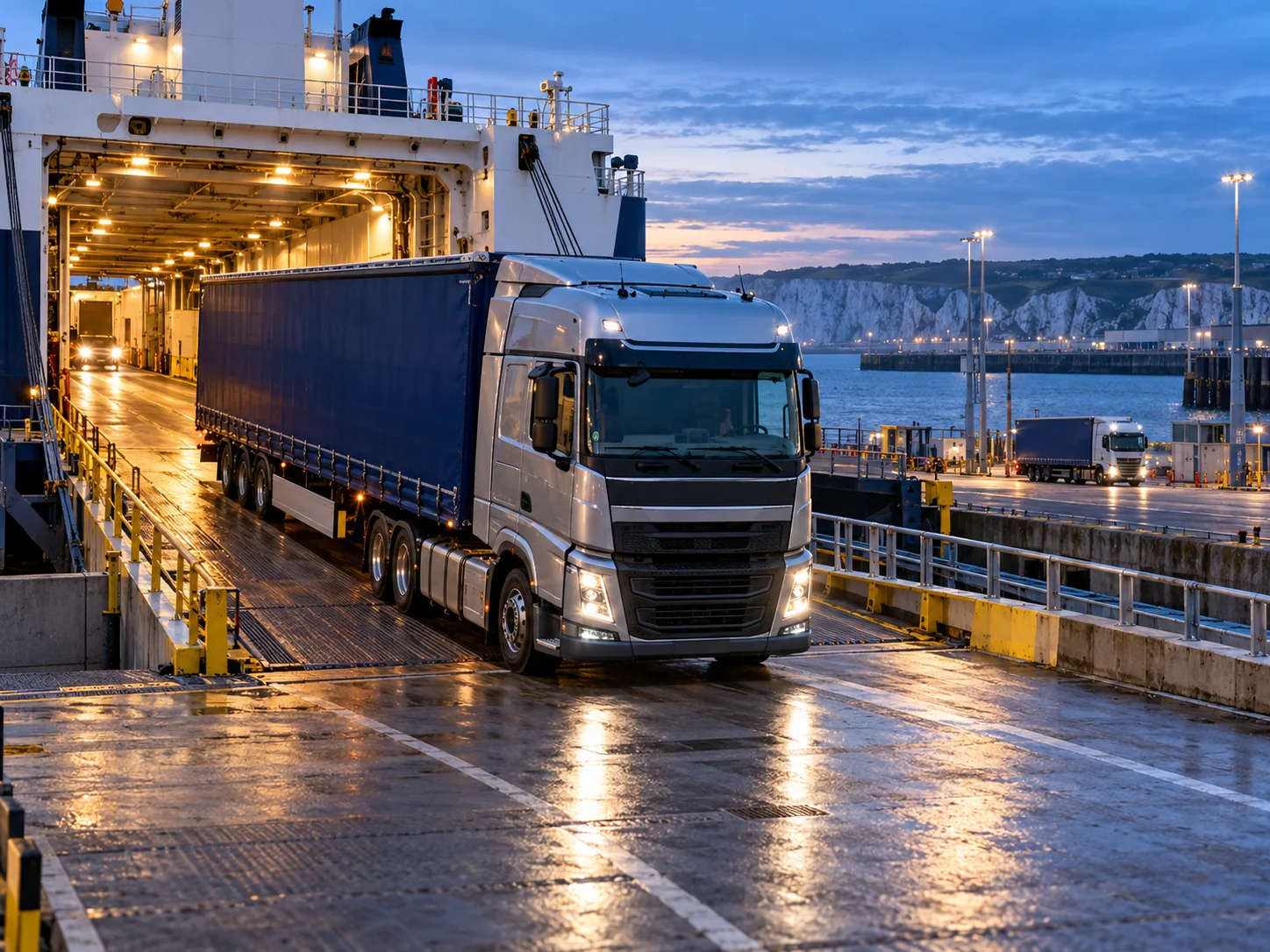
BEFORE OFFERING DDP
Establish the importer, how import VAT will be accounted for and who will provide customs representation. Only then quote the delivery. Writing “DDP” on an invoice does not create a complete British customs clearance and sales model.
What does DDP mean for deliveries to GB after Brexit?
Since 1 January 2021, a typical shipment from Poland to England, Scotland or Wales requires EU export and GB import clearance. This replaced the previous intra-Community trading model on this route. Northern Ireland has separate rules; do not apply this description automatically.
For DDP Incoterms 2020 the seller arranges transport, export and import customs clearance and import charges. Risk remains with the seller until delivery to the named place, ready for unloading. The rule itself does not require cargo insurance.
A well-prepared DDP offer gives the British customer predictability about the delivery and remaining duties. For the exporter it can support commercial relationships, but requires actual import costs to be included in the price.
First establish who will be the importer
DDP transactions do not all have identical tax treatment. Establish the actual sale parties, time and place of supply and entity named in import documents. These alternatives are comparisons, not ready-made instructions for every transaction.
| Issue | Seller arranges import within its own model | GB recipient remains the importer |
|---|---|---|
| Customs formalities | Check import eligibility, representative and seller details. | Recipient involvement and authorisation; data matching its actual role. |
| Import VAT | Identify who accounts for VAT and the deduction or PVA conditions. | Treatment agreed with the recipient, without automatic refund entitlement. |
| UK sales | Assess whether a domestic supply and VAT registration arise. | Assess the whole transaction; the customs entry alone does not determine taxation. |
| Contract terms | Exact DDP place and scope of costs and formalities. | Explicit departures from standard DDP, particularly VAT and buyer duties. |
“DDP excluding VAT” is not a separate Incoterms rule. Specify which VAT, who accounts for it and what documents each party receives. If the buyer arranges import customs clearance, compare the model with DAPrather than leaving conflicting expectations under DDP.
Separate import VAT from VAT on sales
Seller’s VAT registration
Where a Polish business makes a taxable UK domestic supply, check UK registration obligations. A non-established business should not automatically use the domestic registration threshold. Incoterms alone do not determine tax location or make every DDP exporter’s obligations identical. HMRC — VAT registration.
For domestic sales after import, establish the rate for the actual goods and supply; do not automatically apply 20% to everything. Assess import and deduction separately: paying a counterparty’s cost does not itself entitle you to recover its VAT.
PVA — import VAT on the VAT return
Postponed VAT Accounting may let an eligible UK VAT-registered business account for import VAT on its return rather than pay at import. Goods must serve its business and it should have the right to dispose of them; normal deduction rules apply. This is accounting for tax, not exemption.
Correct VAT data and treatment must be in the customs declaration. The representative needs written PVA instructions. Then arrange checks of monthly PVA statements or C79 documents, depending on the method used. HMRC — PVA conditions.
This guide focuses on business DDP deliveries. Consumer distance sales may depend on shipment value, platform involvement and special VAT rules. One B2B model cannot be applied to every e-commerce order.
EORI and customs representation before the first shipment
For EU exports, first check whether the business already has an EORI number. On the GB side, establish numbers and data for the actual importer and declarant. EU EORI does not replace GB EORI where UK rules require it. A foreign business’s eligibility for GB registration depends on its situation and is not automatic for every delivery.
UK VAT or EORI registration does not prove UK establishment for customs purposes. For a non-established business, a representative handling ordinary GB import acts indirectly and accepts the associated liability. Agree support and case acceptance before loading, not when the vehicle is stopped.
Sources: HMRC — EORI eligibility, UK establishment, verification and representation.
Duty depends on the goods and origin, not the DDP label
Before quoting, check classification, customs value, origin and restrictions. EU–UK preference may allow zero duty but requires origin rules and the proper basis for claiming it.
Dispatch from Poland does not automatically confer EU origin. A third-country product merely resold from a Polish warehouse may not qualify. Do not declare origin solely from the seller’s address. HMRC — rules of origin.
Include agreed transport, both customs clearances and charges in DDP pricing, and agree how delays and extra work will be paid. Other services, including transport organisation, are arranged separately; we can recommend trusted partners.
What to prepare before the first DDP delivery to GB
01 · Parties and model
Seller, recipient and planned importer details, business status and the sequence of sale and transport.
02 · Goods and documents
Invoice or draft, description and commodity code, quantities, packaging, weights, value, currency and origin documents.
03 · VAT and registrations
Required EORI, UK VAT where applicable, the import tax party and PVA instructions if used.
04 · Place and transport
Exact DDP address, planned loading, route, carrier and customs presentation locations.
05 · Costs and departures
Price scope, financing of charges and explicit agreement on every change to standard DDP duties.
06 · Customs support
Case acceptance by representatives on both sides. We provide the authorisation template after agreeing details and signing the agreement.
You do not need to create a new entity just to begin the discussion. Let’s first assess the existing business and proposed transaction.
Two customs clearances, one agreed delivery process
Agree the model before loading
We confirm parties, documents, representation and charges. Delivery terms must match the actual agreement.
Prepare the export customs declaration
First we provide our own reference number for presentation. Following presentation and acceptance of the customs declaration, customs assigns the MRN. MRN alone does not prove exit.
Transport and GB import take place
After release for export, transport follows the agreed route. The designated representative handles import using agreed data. Goods remain available for customs checks.
Check documents after delivery
On the EU side, ensure proper exit confirmation, currently CC599C. On the GB side, importer and accounts check import, VAT and sales documents.
Errors or missing exit confirmation may require VAT at the domestic rate. DDP or hiring a customs agency does not guarantee 0%. See our missing CC599C guide.
EXPERIENCED PEOPLE. DIGITAL TOOLS.
Export with Proste Cło. GB import with Simple Duty.
Our main service is customs clearance. Proste Cło prepares Polish export support. Agree the feasibility and scope of GB import customs clearance with Simple Duty before confirming DDP terms and delivery timing to the customer.
We handle documents and arrangements digitally. Online customs clearance does not remove presentation to customs at the agreed location. VAT and accounting need confirmation for the selected model; filing a customs declaration does not replace tax support.
QUESTIONS AND ANSWERS
What else should you know?
Does DDP mean the seller pays import duty and taxes?
Yes, under the standard DDP Incoterms 2020 allocation. But the term does not replace registrations, representation or identifying the taxpayer. Any departure, such as leaving import VAT to the buyer, must be explicit in the contract.
Must a Polish business create a UK company?
Do not assume a separate company is always needed. Establish business status, import model, representation and VAT. UK VAT or EORI alone does not establish UK customs presence.
Does every DDP delivery require the seller’s UK VAT registration?
Incoterms alone do not decide. The actual transaction model matters. A foreign seller making taxable UK supplies may need registration without the domestic threshold. Confirm the model before sale.
Does PVA avoid upfront import VAT payment?
Eligible businesses account for VAT on the UK return instead of paying upfront. It is not exemption; deduction requires normal conditions. Correct data and customs instructions are needed.
Are goods sent from Poland to GB always duty-free?
No. Preference requires origin rules and the proper basis. Purchase, storage or dispatch from Poland alone does not give EU origin.
Can the British recipient remain the importer?
Agree this with the recipient and representative. Define duties, import VAT treatment and seller costs. It departs from standard DDP and should not remain under an unclear “DDP excluding VAT” label.
Do these rules also cover Northern Ireland?
This article covers England, Scotland and Wales. Northern Ireland has separate goods rules and needs its own route, status and registration analysis.
Does online customs clearance remove goods presentation?
No. We handle documents digitally, but goods must be presented under the agreed procedure and made available for inspection.
Sources and further reading
Updated: 2 November 2026. This guidance concerns the transaction models described; documents and parties’ roles must be established for each delivery.
- HMRC: VAT registration, including non-UK businesses.
- HMRC: Postponed VAT Accounting — conditions and guidance.
- HMRC: who should register for EORI.
- HMRC: UK establishment for customs purposes.
- HMRC: checks and customs declaration representation.
- HMRC: customs debt liability.
- HMRC: origin rules and preference.
- ICC Academy: DAP versus DDP — obligations and differences.