

KNOWLEDGE AND PRACTICE · PROCEDURE 42
Import procedure 42 — conditions, documents and VAT.
Importing goods from outside the EU for delivery to another Member State? Check when procedure 42 allows import VAT exemption and how to prepare documents for the onward supply.
Published: Updated:
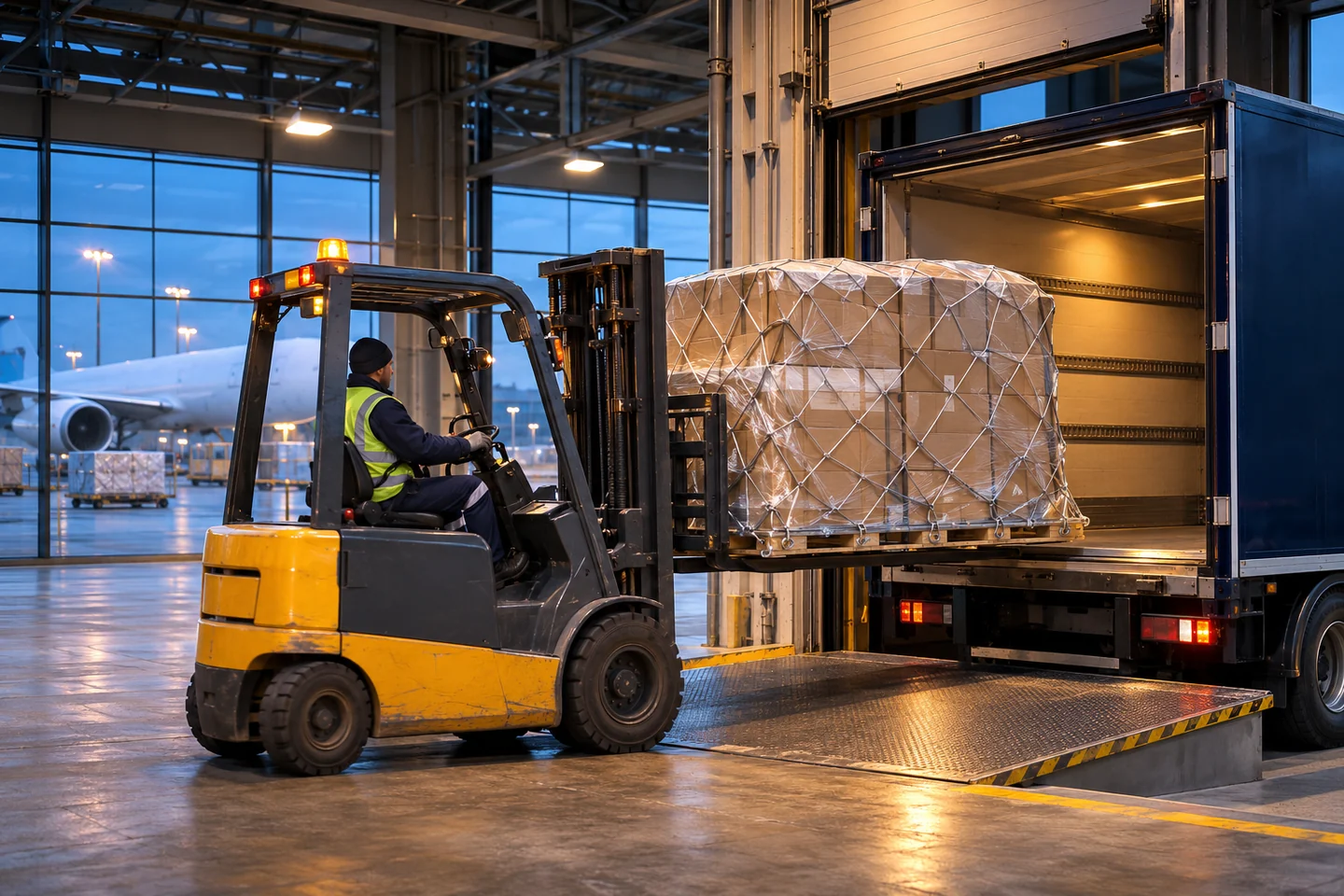
IMPORT AND ONWARD SUPPLY WITHIN THE EU
What is procedure 42?
Procedure 42 concerns goods brought from outside the European Union into one Member State for onward supply to another EU country. If the conditions are met, the import may be exempt from VAT and the subsequent transaction is accounted for as an intra-Community supply of goods (WDT in Polish).
This is a solution for a genuine supply chain where the country of import differs from the destination country. Entering code 42 on a customs declaration is not enough to make every transaction VAT-exempt.
Procedure 4200 — where does the name come from?
You may also encounter the term “procedure 4200”. Code 42 identifies the requested procedure, while the full customs declaration code also takes account of the previous procedure. Do not automatically use 4200 for every consignment without checking its customs history.
Customs duty and other tariff measures are assessed separately. Goods, customs value and origin must still be correctly established and import requirements met.
How does procedure 42 work on import?
- Arrival from outside the EU. The goods arrive in the country where import customs clearance takes place.
- Release for free circulation and assessment of exemption. The customs declaration includes the correct tax data and documents demonstrating that the goods are intended for onward dispatch.
- Supply to another EU country. The goods actually leave the country of import as part of an intra-Community supply. Their transport and delivery must be documented.
- Tax reporting and completion of the records. The importer or appropriate representative fulfils tax obligations and presents the required documents. The intra-Community acquisition (WNT in Polish) is assessed in the destination country.
Example route: non-EU country → import into Poland → delivery to a customer in Germany. A sale to a customer and a transfer of own goods have different requirements; both require the roles and relevant VAT numbers to be established.
Procedures 40 and 42 — what changes in tax treatment?
| Area | Procedure 40 | Procedure 42 |
|---|---|---|
| Onward destination of the goods | No onward intra-Community supply condition specific to code 42 | Destination in another EU country and an actual onward intra-Community supply |
| Import VAT | Generally must be accounted for; the mechanism depends on the conditions met | VAT exemption possible if the conditions are met and documented |
| Cash flow | VAT payment or accounting in the return under Article 33a, if eligible | No payment of exempt import VAT may reduce the funding needed for tax |
| Customs duty and other requirements | Assessed for the goods and operation | Code 42 alone does not remove them |
| Post-import documentation | Obligations arising from actual onward trade | Particular importance of supply evidence, the recapitulative statement and documents for customs |
Under the general rules, Article 33(4) of the Polish VAT Act allows 10 days for payment from notification by customs of the amount due, subject to separate mechanisms. Not every clearance under procedure 40 should therefore be described as requiring immediate VAT payment.
Article 33a is not procedure 42. Accounting for import VAT in a tax return is a different mechanism from exemption linked to an onward intra-Community supply. The choice should follow the transaction model, not merely the expectation of avoiding a tax payment.
Which conditions must be met in Poland?
The domestic legal basis is section 4 of the Regulation on VAT exemptions. Before lodging the customs declaration, establish in particular:
- The goods’ actual destination. Import must be followed by an intra-Community supply to another EU country, with documents demonstrating that intention at the import stage.
- The correct VAT details. As a rule, a valid EU VAT number of the importer and the relevant buyer’s VAT number are required; for transfers of own goods, the importer’s number in the destination country is needed. Special rules apply to a tax representative under Article 18d.
- The parties and the supply chain. The importer, the buyer for VAT purposes and the physical recipient are not always the same entity. Where there are several supplies, the whole chain must be analysed.
- Post-import conditions. The intra-Community supply must take place, be correctly reported and documented, and the required documents must be submitted to customs on time.
- Any security required. Previous failures to meet documentary obligations may affect the need to provide VAT security. Do not assume every operation can proceed without it.
Verify VAT numbers before the operation and retain the check result. EORI identifies operators for customs purposes and does not replace EU VAT registration.
Importer, customs agency and tax representative.
The customs representative prepares and handles the customs declaration within the agreed scope. The tax representative performs specific VAT obligations under the legislation and a written agreement. Customs clearance authorisation is not an agreement appointing a tax representative.
When is a model without separate Polish VAT registration for the importer possible?
Article 18d of the Polish VAT Act provides a specific model for a taxable person who carries out only the import specified there followed by an intra-Community supply in Poland and is not registered as an active VAT taxpayer. The appointed representative then performs certain obligations in their own name and on behalf of that taxable person.
This may allow special registration rules to apply. It is not a general exemption from all registration, identification and tax obligations. Other activities by the importer in Poland may change the assessment. Articles 18b–18d of the Polish VAT Act set out the representative’s responsibilities and eligibility requirements.
Before import, we establish which model applies and who is responsible for documents, tax returns and the EU VAT recapitulative statement. We do not automatically assign every obligation to the carrier, recipient or customs agency.
Which documents are needed for procedure 42?
Before import
Invoice, packing list, goods description and classification, participant details, EORI, VAT numbers, transport documents and evidence of planned onward dispatch to another EU country.
After delivery
Evidence of actual transport and receipt, consistent goods and quantity data, intra-Community supply reporting records and documents required by customs.
A transport contract, order or invoice with the relevant information may demonstrate the intended onward transport. This is different from later proof of actual delivery. A single general declaration of intention does not replace the full documentation.
Tax references and evidence must be correctly entered in the customs declaration. The PUESC instructions for procedures 42 and 63 cover VAT data and evidence of onward dispatch under code Y044, among other things. A document code is not a substitute for its content.
If a tax representative has been appointed, the relevant agreement and a copy at import are also needed. We prepare customs clearance authorisation after the details are agreed and the service agreement signed.
Obligations remain after customs clearance.
Before dispatch, agree who collects proof of receipt, who accounts for the intra-Community supply and who submits documents to customs. Leaving this until after import increases the risk of missing or inconsistent records.
This is how section 4(2)(2) defines the deadline for presenting documents specified in paragraphs 3 or 4 of the Regulation. It is not simply four months from customs clearance. The documents confirm that the intra-Community supply was reported in the recapitulative statement and, in certain cases, include an additional certificate or the representative’s documents.
This obligation is separate from the deadlines for reporting the intra-Community supply and collecting evidence for the 0% rate. Do not postpone reporting the transaction or collecting evidence for four months. A specific timetable must be established for the dates and parties involved.
Gaps may lead to the exemption being challenged and tax becoming payable, with possible interest or security requirements on later imports. Where security was provided and documents are not submitted on time, the rules provide for unpaid tax to be covered from that security. Check the conditions in section 4 of the Regulation.
Customs procedure 42 — examples.
1. Import into Poland, sale to a buyer in Germany
The importer brings goods from outside the EU into Poland and then supplies them to a German buyer. We check registrations, invoices, transport attribution and supply records. If the conditions are met, import may be VAT-exempt and the buyer accounts for the relevant intra-Community acquisition in the destination country.
2. Import into Poland, own warehouse in another EU country
After import, the goods go to the importer’s own warehouse in another EU country. This need not mean a sale to an outside customer. Check whether the own-goods transfer is an intra-Community supply, which registrations are needed and how to document the subsequent acquisition.
3. Import into Germany, onward supply to Poland
A Polish business may receive goods released for free circulation in another EU country. Import exemption is then assessed under that country’s law, while the Polish side determines the intra-Community acquisition treatment. Do not automatically apply the Polish deadline or representation model to foreign customs clearance.
Cash-flow example: PLN 150,000 and PLN 34,500 VAT
If the full import VAT base is PLN 150,000 and the applicable rate is 23%, the tax is PLN 34,500. This is only a calculation example. The base may also include excise and incidental costs where the rules require them to be added.
Exemption under procedure 42 may reduce funding needed for that amount at import, but it does not remove acquisition VAT reporting or guarantee full VAT deduction. Deduction rights, timing, security and other costs depend on the transaction. For procedure 40, eligibility for Article 33a should also be considered.
Intra-Community supplies, acquisitions and Intrastat — separate obligations.
WDT means an intra-Community supply, while WNT means an intra-Community acquisition of goods. VAT treatment depends on the parties, place and nature of the operation. The 0% rate for supplies has separate conditions under Article 42 of the Polish VAT Act.
Intrastat records statistics on trade in goods within the EU. The obligation does not automatically follow from using procedure 42; the scope of trade and statistical thresholds must be assessed, among other things. An Intrastat declaration does not replace a tax return or EU VAT recapitulative statement.
If you need support in this area, explore our Intrastat declaration preparation service. Prepare transport records so they remain consistent across customs, tax and statistical reporting.
Which errors may put exemption at risk?
- Goods remain in the country of import despite the declared onward intra-Community supply.
- An incorrect or inappropriate VAT number or failure to establish the actual buyer.
- Inconsistent invoices, quantities and transport documents — it is unclear which goods reached the recipient.
- Missing proof of delivery or failure to submit documents to customs on time.
- An unreported or incorrectly reported intra-Community supply or incorrectly defined duties of the tax representative.
- Changing the recipient or route without assessing the impact on exemption conditions and document update requirements.
- Reducing a chain transaction to the CMR details, without identifying the buyer for VAT purposes or attributing transport.
Transactions involving several sellers and recipients need separate analysis. The website also includes a discussion of a tax ruling on procedure 4200. It concerns a specific set of facts; do not automatically apply its conclusions to every supply.
How do we prepare customs agency support?
- Send the transaction plan. We establish the route, goods, contracting parties and destination country.
- We check the customs and tax scope. We identify the data, documents and any tax representative involvement required.
- We agree responsibilities and deadlines. We identify who provides delivery confirmation and tax reporting documents. Once the terms are agreed, we prepare customs clearance.
- We complete the documentation within the agreed scope. Release of the goods alone does not end the obligations under procedure 42.
Our main service is customs clearance. Transport and foreign tax reporting must be agreed separately; we can recommend trusted partners for other matters. Explore our import customs service, guidance on establishing CN codes and EORI number guide.
EXPERIENCED PEOPLE. DIGITAL TOOLS.
Let’s plan the procedure before the goods arrive.
Proste Cło customs agency can help analyse the route, commercial documents and customs clearance scope. We establish who imports, who is responsible for the onward supply and which data are needed to assess procedure 42.
What should you send first?
- Country of dispatch, country of import, final delivery location and planned transport date.
- Importer, seller and buyer details, EORI and appropriate VAT numbers, and the role of any intermediaries.
- Invoices or draft documents, orders, agreements and delivery terms.
- Goods description, quantities, value, origin, proposed CN codes and any required authorisations.
- Transport plan, carrier and agreement on who will provide proof of receipt and when.
- VAT registration details and whether a tax representative has been appointed and on what basis.
You can send documents electronically. Once the details are agreed and the agreement signed, we send the prepared authorisation template. Online service does not remove presentation of goods to customs or possible inspection.
QUESTIONS AND ANSWERS
What else should you know?
What do procedure 42 and code 4200 mean?
Procedure 42 combines release for free circulation with onward supply to another EU country, subject to import VAT exemption conditions. Code 4200 is one full customs declaration code; its selection also depends on the goods’ previous customs history.
Does procedure 42 also exempt customs duty?
Procedure 42 itself concerns import VAT exemption. Duty, origin, classification and other measures are assessed separately. A zero duty rate may arise from the relevant tariff or preferences, not merely from code 42.
Is procedure 42 the same as Article 42 or Article 33a of the Polish VAT Act?
No. Procedure 42 describes a particular import and onward supply model. Article 42 sets conditions including those for the 0% rate on intra-Community supplies. Article 33a concerns accounting for import VAT in the tax return subject to its conditions. These are different legal bases and mechanisms.
Can I use procedure 42 if the goods stay in Poland?
If import takes place in Poland and the goods remain there, the basic condition of onward supply to another EU country is not met. Other appropriate import tax arrangements must be established. Do not create an artificial movement solely to obtain exemption.
Does procedure 42 cover transfers of own goods?
It may cover a transfer of own goods to another EU country if the operation is treated as an intra-Community supply and meets the conditions. The importer’s own appropriate VAT number in the destination country then matters. Not every movement is automatically an intra-Community supply.
Is a customs agency automatically a tax representative?
No. Customs and tax representation have different legal bases and responsibilities. A tax representative is appointed by written agreement and must meet statutory requirements. Customs clearance authorisation alone does not create tax representation.
Is a CMR enough to retain the exemption?
Do not assess the whole procedure from one document. A CMR may be important transport and delivery evidence, but VAT details, transaction documents, correct supply reporting and submission of required documents to customs must also be checked.
How is the four-month deadline calculated in Poland?
Section 4 of the exemptions Regulation allows four months after the month the import tax liability arises to present the specified documents. This is separate from supply reporting deadlines and collecting evidence for the 0% rate. Establish the specific deadline and responsible person before import.
Is Intrastat required for every procedure 42 import?
Not automatically. Intrastat is a separate statistical obligation depending, among other things, on the scope of trade and relevant thresholds. An EU VAT recapitulative statement, tax return and Intrastat declaration do not replace each other.
Does procedure 42 always improve cash flow and ensure VAT neutrality?
It may reduce import VAT funding where exemption conditions are met. It does not guarantee full deduction in the destination country, no security or no other costs. The outcome depends on the actual transaction, registrations, records and tax rules.
Sources and verification materials
We assess the conditions for the specific goods and operation. The official sources below explain exemption, documentation and the separate VAT rules.
- Polish VAT exemptions Regulation — section 4, import and onward intra-Community supply; consolidated texts and amendments
- Polish VAT Act — Articles 13, 18b–18d, 30b, 33–33a, 42, 97 and 100
- VAT Directive — Articles 138 and 143, intra-Community supply and import exemption
- PUESC — instructions for procedures 42 and 63, VAT data and proof of onward dispatch
- Polish Ministry of Finance — intra-Community supplies, documentation and tax reporting
- Polish Ministry of Finance — procedure 42 and checks on its conditions